

Essential 7 Ways AI‑Powered Business Intelligence Lead Generation Drives Smart B2B Lead Generation
AI-Powered Business Intelligence Lead Generation blends data aggregation, machine‑learning models, and visual analytics to surface high‑value prospects, automate scoring, and keep the pipeline moving. By wiring monitoring tools such as Prometheus to visualization platforms like Grafana, teams get real‑time insight into lead quality and can turn raw signals into qualified opportunities.
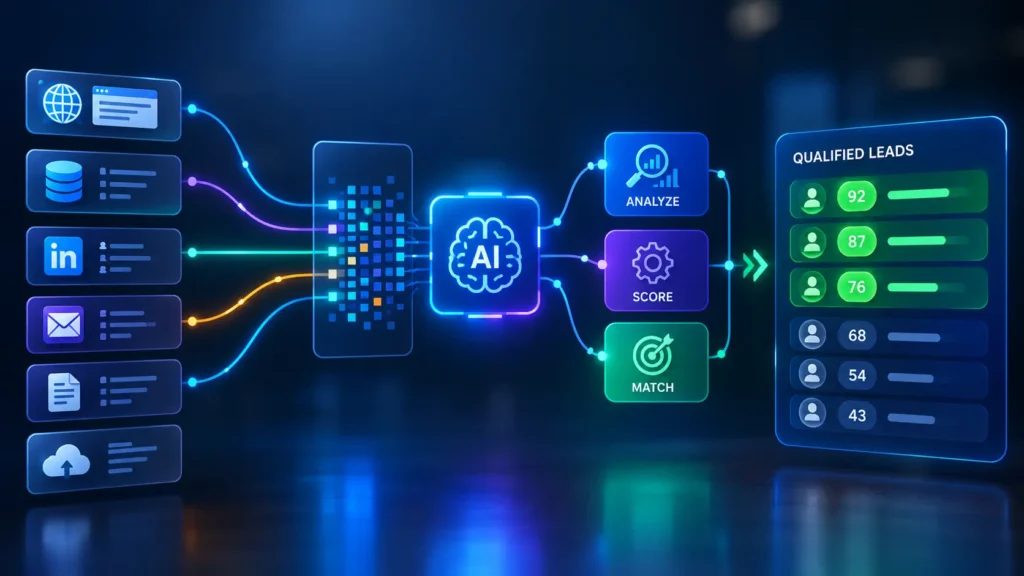
Learn more about Python AI business intelligence dashboard guide.
What is AI‑powered business intelligence lead generation?
AI‑powered business intelligence lead generation merges classic BI tasks collecting, cleaning, and reporting data with algorithms that predict prospect value. Rather than manually digging through CRM records, the system evaluates behavioral cues, firmographic details, and engagement history to highlight leads most likely to convert. This data‑driven prospecting cuts guesswork and directs sales effort where it matters most.
How can AI‑powered business intelligence lead generation automate lead scoring?
AI dashboards feed fresh data into a trained model that continuously updates each prospect’s score. The model weighs factors such as:
- Fit – industry, company size, technology stack.
- Intent – site visits, content downloads, email clicks.
- Engagement – meeting requests, demo sign‑ups, social touches.
The dashboard visualizes score distribution in real time, letting reps focus on top‑tier prospects without juggling spreadsheets. This lead‑scoring automation keeps the sales pipeline fresh and responsive.
Why does AI improve B2B prospect identification?
AI uncovers patterns that are easy for people to miss. Machine‑learning models can:
- Spot emerging buying signals across disparate sources.
- Cluster similar accounts to reveal hidden segments.
- Forecast conversion probability with more nuance than rule‑based scores.
The outcome is a sharper prospect identification process that surfaces high‑value opportunities earlier in the funnel, especially for complex sales cycles.
Which AI tools help accelerate the sales pipeline?
A practical stack for an AI‑enhanced pipeline includes:
| Component | Role | Example |
|---|---|---|
| Data collection | Gather CRM, web, and third‑party signals | APIs, ETL pipelines |
| Machine learning | Build scoring and segmentation models | Python libraries (scikit‑learn, TensorFlow) |
| Monitoring | Track model latency and data freshness | Prometheus monitoring overview |
| Visualization | Show scores, trends, and alerts | Grafana dashboard documentation |
| Role‑play training | Reinforce qualification criteria with simulated calls | Internal AI roleplay sales training article |
These open‑source tools provide a cost‑effective foundation while staying flexible for custom models.
Can AI‑driven BI uncover high‑value prospects?
Yes. By applying predictive analytics to enriched datasets, AI‑driven BI can flag accounts that meet both firmographic fit and demonstrated intent. For instance, a model might highlight a mid‑market healthcare provider that recently searched for compliance solutions and attended a relevant webinar signals that suggest buying readiness before a sales rep makes contact.
Should I integrate AI roleplay training with lead qualification?
Pairing AI roleplay sales training with lead qualification reinforces the criteria used by the AI models. Simulated conversations let reps practice the right discovery questions, generating higher‑quality data for the scoring algorithm. Over time, this feedback loop sharpens both human judgment and model accuracy, creating a more robust qualification process.
Building an AI‑Enabled BI Dashboard: Tools and Architecture
- Ingest data from CRM, marketing automation, and external APIs into a data lake.
- Transform the data with Python scripts that calculate features such as engagement frequency and firmographic scores.
- Expose metrics (e.g., request latency, error rates) via Prometheus for health monitoring.
- Create visualizations in Grafana to display lead score distributions, pipeline velocity, and alert thresholds.
- Deploy the model as a microservice that updates scores near real time, feeding results back into the dashboard.
This design follows common business‑intelligence architecture patterns and supports continuous improvement.
Automating Lead Scoring with Machine Learning
- Collect training data: past leads, outcomes, and interaction logs.
- Feature engineering: derive variables like average session duration, product‑specific page views, and account growth rate.
- Model selection: start with logistic regression for interpretability, then experiment with gradient boosting for higher accuracy.
- Evaluation: use cross‑validation and monitor precision‑recall to ensure the model distinguishes true prospects.
- Deployment: containerize the model, expose an API, and let the dashboard pull updated scores every few minutes.
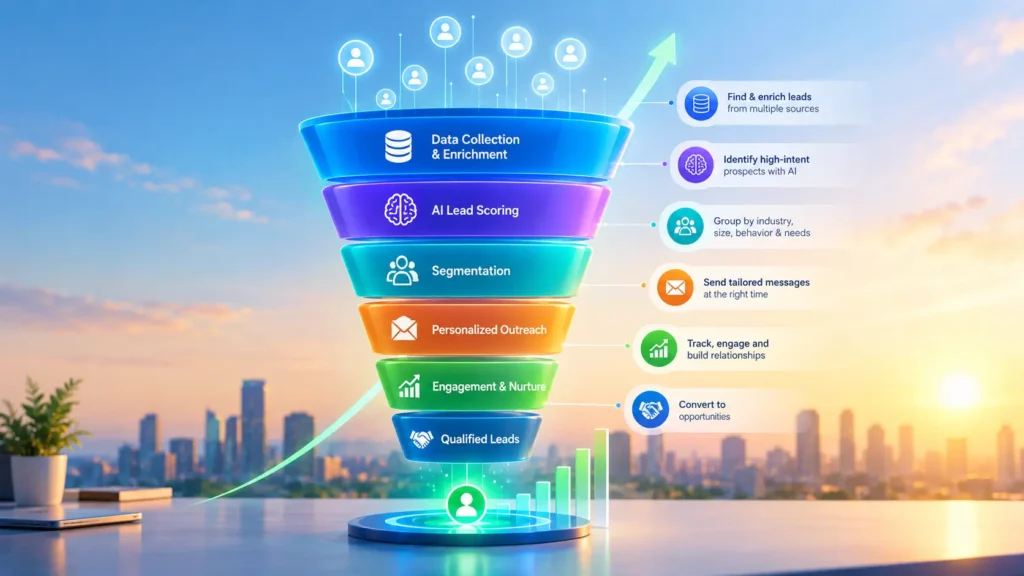
Real‑time updates keep AI lead qualification tools aligned with the latest prospect behavior, reinforcing the overall AI‑powered business intelligence lead generation strategy.
Key Takeaways
- AI‑powered business intelligence lead generation merges data aggregation with predictive models to surface high‑value prospects.
- Automated lead scoring refreshes scores in real time, freeing reps from manual ranking.
- Open‑source tools like Prometheus and Grafana provide reliable monitoring and visualization for AI dashboards.
- Machine‑learning models need quality training data, thoughtful feature engineering, and ongoing evaluation.
- Combining AI roleplay sales training with automated scoring creates a feedback loop that sharpens both human and algorithmic judgment.
Frequently Asked Questions
How does an AI business intelligence dashboard differ from a traditional BI report?
Traditional BI reports present static snapshots of historical data, while an AI dashboard continuously ingests new signals, applies predictive models, and updates lead scores in real time. This dynamic approach enables proactive outreach rather than reactive analysis.
What data sources are essential for effective AI lead scoring?
Key sources include CRM records, website analytics, email engagement metrics, product usage logs, and third‑party firmographic databases. The richer and cleaner the dataset, the more accurate the AI‑driven scoring.
Can small teams implement AI‑powered lead generation without large budgets?
Yes. By leveraging open‑source components such as Prometheus for monitoring, Grafana for visualization, and Python libraries for modeling, small teams can build scalable AI dashboards without hefty licensing costs.
How often should the AI scoring model be retrained?
Retraining frequency depends on data velocity and market dynamics. A common practice is to retrain quarterly or whenever a noticeable shift in lead behavior occurs, ensuring the model stays aligned with current buying patterns.
Is AI roleplay training mandatory for AI‑driven lead qualification?
It isn’t mandatory, but roleplay training speeds adoption by helping salespeople understand and trust the AI criteria. The practice also generates valuable interaction data that can improve model performance over time.
