

How to Choose a Software Development Partner for Your Business in 2027
To choose a software development partner that fits your business goals, evaluate their industry experience, technical compatibility, security practices, agile transparency, communication, discovery workshop outcomes, and post-launch support. Score each vendor against these criteria and select the partner that best aligns with your requirements, risk tolerance, and long-term roadmap.
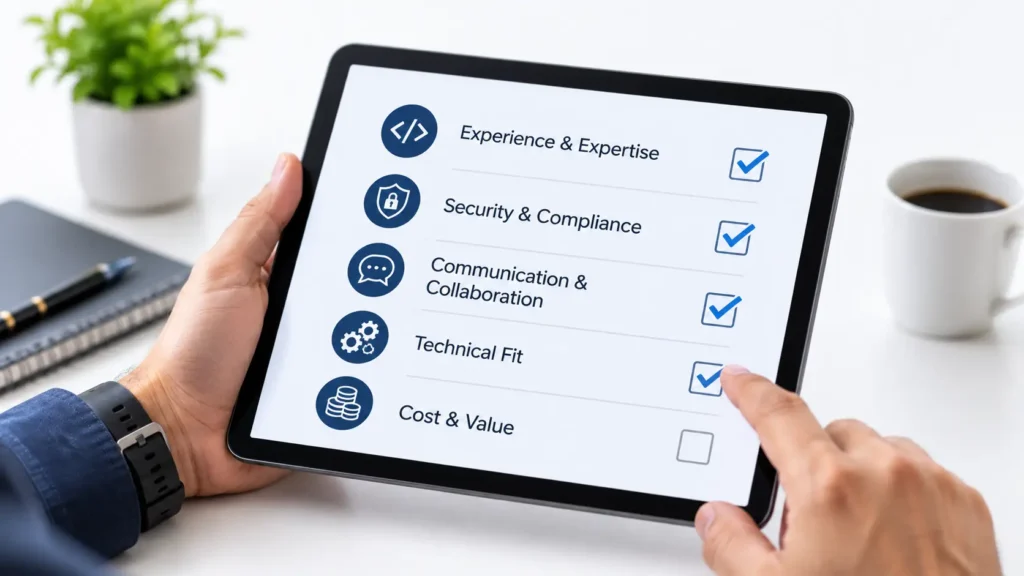
What Factors Should Founders Consider When Choosing a Software Development Partner?
- Relevant experience – Seek teams that have delivered projects in a similar domain or have cross‑industry expertise that can be adapted to your problem.
- Technical fit – Verify that the partner’s stack (cloud‑native architecture, API strategy, CI/CD pipelines) matches the technologies you plan to use. CI/CD pipelines are automated workflows that build, test, and deploy code quickly and reliably.
- Security by design – Ask how security is integrated from requirements through deployment and whether they follow recognized standards.
- Agile delivery style – Transparent sprint planning, visible backlogs, and regular demos help you stay informed without micromanaging.
- Ownership & support – Clarify code ownership, intellectual‑property rights, and the level of maintenance the vendor will provide after launch.
How Can CEOs Evaluate a Software Development Partner’s Communication Style?
- Meeting cadence and tools – Inquire about daily stand‑ups, weekly demos, and the collaboration platforms (e.g., Slack, Teams) the team prefers.
- Responsiveness – Test reply times during the RFP stage; a prompt response often signals an engaged partner.
- Documentation quality – Request a sample of technical specs or a user‑story backlog. Clear, well‑structured docs reduce misunderstandings later.
- Cultural alignment – Observe whether the vendor’s tone and decision‑making approach mesh with your company culture, as this influences day‑to‑day collaboration.
Why Is Security by Design Important When You Choose a Software Development Partner?
Integrating security into every phase of development from architecture and implementation to code reviews and testing helps reduce security risks, supports compliance requirements, and builds customer confidence.
Which criteria reveal a partner’s technical fit for a project?
| Criterion | What to Look For | Why It Matters |
|---|---|---|
| Technology stack | Experience with your preferred languages, frameworks, and cloud platforms | Faster onboarding and smoother integration |
| DevOps practices | Use of CI/CD pipelines, automated testing, infrastructure‑as‑code | Maintains quality while accelerating delivery |
| API integration | Proven work with REST, GraphQL, or SOAP connectors | Lowers integration risk and future maintenance effort. API integration is the process of connecting different software systems so they can exchange data. |
| Scalability approach | Design patterns for microservices, containers, or serverless | Supports growth without major re‑architecture. Microservices break an application into small, independent services that can be scaled individually. |
Learn more about agile software development transparency.
Can a discovery workshop help you assess ownership and support expectations?
Yes. A well‑structured discovery workshop surfaces hidden requirements, clarifies scope, and defines who owns each deliverable. During the session, ask:
- Who will maintain the code after launch?
- What support tiers are offered (e.g., 24/7, business‑hours only)?
- How are change requests prioritized and priced?
The workshop outcomes provide a shared reference point for the partnership, helping both sides align on scope, responsibilities, and expectations for long-term collaboration.
Should businesses prioritize agile transparency when they choose a software development partner?
Agile transparency through visible backlogs, sprint reviews, and progress tracking helps stakeholders understand how a project is progressing. Partners that share project dashboards and regular updates reduce uncertainty and support quicker decision-making. Look for teams that provide access to sprint boards and conduct regular demonstrations.
How Can You Assess Technical Fit When You Choose a Software Development Partner?
Start by sharing a high-level architecture diagram and a list of required technologies. Ask the vendor to prepare a concise technical proposal outlining how they would implement key components, including CI/CD pipelines and API integrations. Compare the proposal with your internal standards to evaluate technical alignment.
Learn more about custom software development services.
What Questions Should You Ask When Choosing a Software Development Partner?
- How does the team gather and prioritize requirements?
- What is the process for handling change requests?
- Who owns the source code and intellectual property?
- What support models are available after launch?
- How frequently do they conduct security testing, and which relevant security certifications or standards do they follow?
How important is post‑delivery support for long‑term success?
Ongoing support is essential for maintaining software reliability and security. It helps resolve bugs, apply updates, and introduce new features while minimizing disruption to business operations. Clarify service‑level agreements, response times, and whether the same team will handle maintenance.
Key Takeaways
- Use a weighted checklist covering experience, technical fit, security, communication, and support.
- Verify security-by-design practices against recognized standards and request evidence of recent testing.
- Prioritize partners that demonstrate agile transparency and provide consistent progress reporting.
- Conduct a discovery workshop to clarify scope, ownership, and post-delivery expectations.
- Evaluate communication early; responsiveness and documentation quality can indicate how well the partnership will work.
Frequently Asked Questions
How do I evaluate a vendor’s experience without a long portfolio?
Ask for references from clients in similar industries, request a brief case study that outlines challenges and outcomes, and probe the team’s specific role in those projects.
What signals indicate a strong communication culture?
Prompt replies, clear meeting agendas, well‑structured documentation, and a willingness to adapt communication tools to your preferences are good indicators.
Can I rely on a vendor’s security claims without an independent audit?
Security statements are helpful, but an independent audit or a joint penetration test provides stronger assurance.Request recent audit reports or propose a collaborative security review.
How can I ensure the partner remains agile as the project evolves?
Set expectations for regular sprint reviews, backlog grooming sessions, and transparent metrics. Include clauses in the contract that require the team to maintain visible progress indicators.
