

AI-powered lead scoring: How B2B Sales Teams Identify High‑Quality Leads
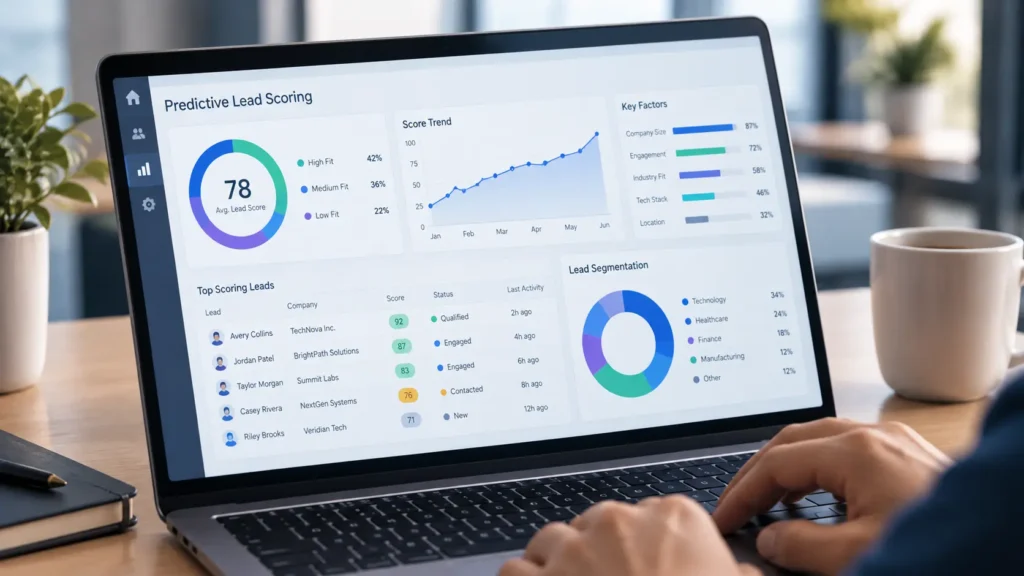
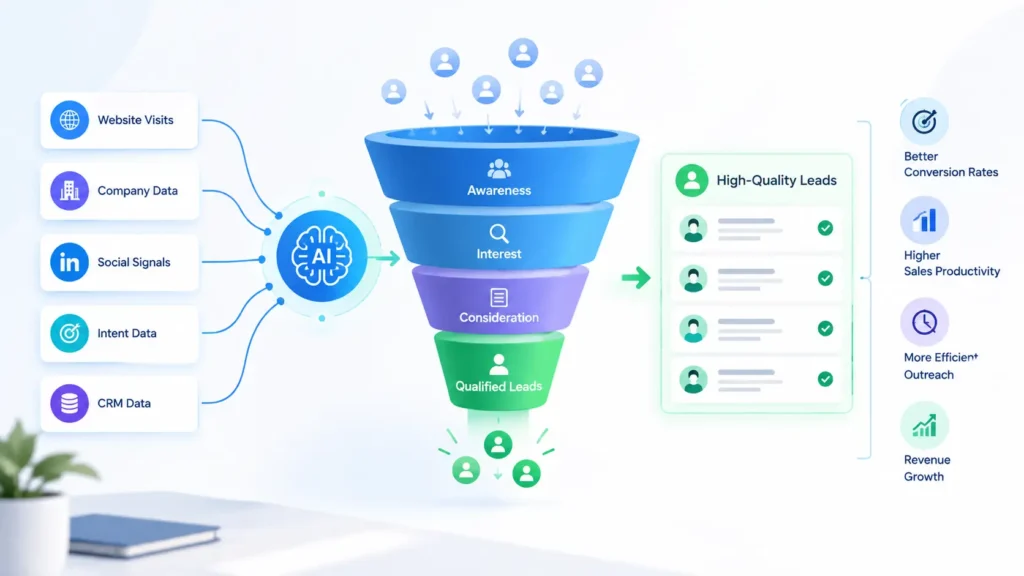
AI-powered lead scoring blends firmographic, behavioral and historical conversion data into a single numeric rating. When the rating lives inside a CRM, sales reps can automatically surface the most promising prospects, focus outreach on them, and monitor impact through metrics such as qualification scores, deal velocity and win‑rate trends.
Why does AI-powered lead scoring matter for B2B sales?
Traditional qualification relies on static rules or gut feeling, which often miss subtle patterns in prospect behavior. AI-powered lead scoring applies predictive analytics to large, diverse data sets, delivering a dynamic, data‑driven ranking of leads. The result is a tighter B2B lead qualification process, less time spent on low‑probability accounts, and sales effort that aligns with revenue potential.
What data sources are needed for AI-powered lead scoring?
| Data category | Typical sources | Quality tips |
|---|---|---|
| Firmographics | Company size, industry, revenue, location | Keep records current; follow data‑enrichment standards |
| Engagement signals | Email opens, website visits, content downloads, webinar attendance | Capture timestamps; filter out bot traffic |
| Behavioral patterns | Touch‑point sequences, intent keywords, product‑trial usage | Normalize event naming across channels |
| Historical outcomes | Won/lost deals, sales‑cycle length, win‑rate by segment | Use consistent deal‑stage labeling |
Clean, de‑duplicated inputs feed the machine‑learning algorithms and help prevent bias. Regular audits and automated validation rules keep data quality high.
How does AI analyze engagement signals for lead qualification?
Machine‑learning models such as gradient‑boosted trees or neural networks detect correlations between engagement actions and eventual conversions. A prospect who downloads a technical whitepaper, attends a demo, and repeatedly visits pricing pages will typically receive a higher predictive rating than one who only opens a newsletter. The model continuously retrains on new outcomes, refining the weight it assigns to each signal.
Which KPIs indicate successful AI-powered lead scoring implementation?
- Qualification score – Composite rating derived from the model and linked to lead status.
- Deal velocity – Time from qualified lead to closed‑won, compared before and after adoption.
- Win‑rate by score tier – Percentage of wins for high‑scoring versus low‑scoring leads.
- Rep confidence index – Survey‑based self‑assessment correlated with performance data.
Monitoring these indicators in a dashboard provides both leading and lagging signals of impact.
Can AI lead scoring integrate with existing CRM systems?
Yes. Most modern CRMs expose APIs or native AI extensions that accept a numeric rating and surface it on the lead or account record. A typical integration workflow includes:
- Define a score field in the CRM schema.
- Build a data pipeline that feeds raw prospect data to the AI model.
- Push the resulting rating back to the CRM via batch or real‑time API calls.
- Configure lead‑routing rules that prioritize high‑scoring leads to top‑performing reps.
This approach aligns with “how to implement AI lead scoring in CRM” best practices and avoids the need for a separate platform.
Should companies prioritize firmographics or behavioral data in AI scoring?
Both data types add value, but behavioral signals often carry stronger predictive power because they reflect intent. A balanced model starts with firmographics to establish a baseline probability and then adjusts the rating based on real‑time engagement. Data‑enrichment standards keep firmographic fields accurate, while continuous monitoring of behavioral inputs keeps the model responsive to market shifts.
How can B2B teams measure the impact of AI-powered lead scoring?
Teams typically track changes in qualification scores, deal velocity, and win‑rate by score tier over several months. Comparing these metrics before and after the model goes live can reveal trends, while a rep confidence index helps gauge adoption. Because results depend on data quality and model maturity, it’s wise to treat early improvements as indicative rather than definitive.
Learn more about AI roleplay sales training blog.
Key Takeaways
- AI-powered lead scoring blends firmographic, engagement and historical data into a dynamic ranking.
- High‑quality, regularly cleansed data is essential for reliable model output.
- Integration with the CRM enables automatic lead routing and real‑time visibility.
- Track qualification score, deal velocity, win‑rate by score tier, and rep confidence to demonstrate impact.
- Prioritize behavioral signals while using firmographics as a supporting layer.
Frequently Asked Questions
What technology powers AI lead scoring?
Machine‑learning algorithms such as gradient‑boosted trees or deep‑learning networks process large, multi‑dimensional data sets to predict lead conversion likelihood. Models are trained on historical outcomes and continuously refined as new data arrives.
How long does it take to see results after deploying AI-powered lead scoring?
Results vary by data maturity and sales‑cycle length. Organizations typically notice measurable changes in qualification scores and deal velocity within a few weeks of full integration, assuming the model receives clean, up‑to‑date data.
Is AI lead scoring suitable for all B2B industries?
The approach is industry‑agnostic but works best where there is sufficient prospect interaction data—such as technology, software, finance and professional services. Companies with limited digital touchpoints may need to invest in data collection first.
Can AI lead scoring replace human judgment?
AI augments, not replaces, human expertise. Sales reps still apply contextual knowledge, but the rating provides a data‑driven starting point for prioritization and conversation planning.
Where can I learn more about AI integration with CRM platforms?
For an overview of AI capabilities within leading CRM solutions, see the Salesforce AI CRM overview.
